
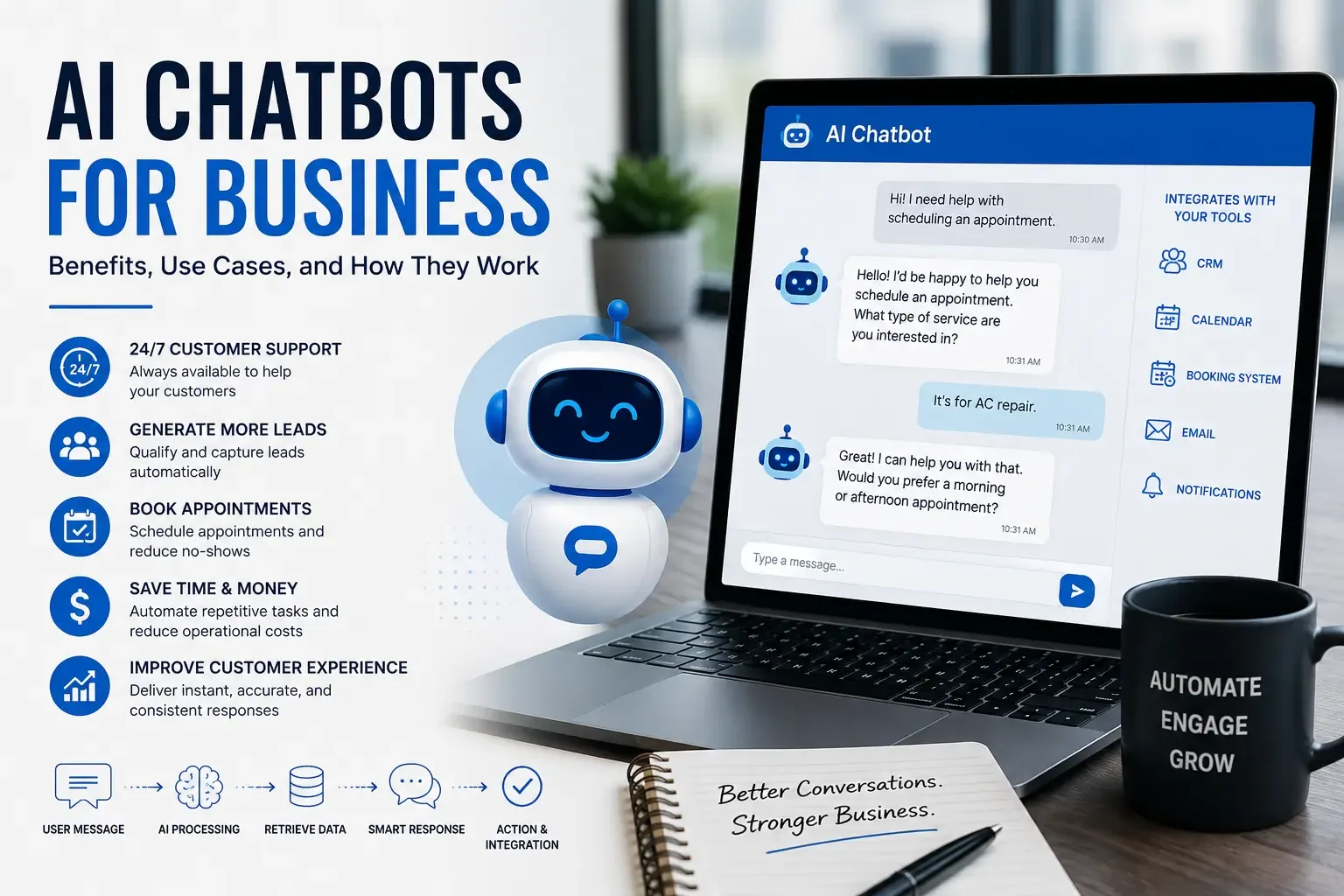
Customers expect businesses to respond quickly.
Whether someone is comparing services, checking availability, asking about pricing, or trying to schedule an appointment, waiting several hours for a reply can be enough to make them look elsewhere.
For many businesses, however, providing instant support around the clock simply isn't practical. A small team may already be handling sales calls, customer service, operations, and existing clients.
This is where AI chatbots can make a meaningful difference.
Modern AI chatbots can answer common questions, collect customer information, qualify potential leads, assist with bookings, and guide website visitors toward the right next step. Instead of functioning like the basic scripted bots businesses used a few years ago, today's systems can understand natural language and carry on much more useful conversations.
For U.S. businesses looking to improve customer experience while reducing repetitive work, an AI chatbot can become an important part of the sales and support process.
This guide explains how AI chatbots work, their major benefits, where businesses are using them, and what you should consider before adding one to your website.
What Is an AI Chatbot?
An AI chatbot is software designed to communicate with customers through text-based conversations.
It can be added to a business website, customer portal, messaging platform, or other digital channel.
Traditional chatbots usually operate through predefined rules.
For example, a visitor might see:
What can we help you with?
- Schedule an appointment
- Check pricing
- Contact support
The customer selects an option, and the chatbot follows a predefined conversation path.
AI-powered chatbots are more flexible.
Instead of forcing visitors to select from a limited number of options, they can interpret questions written in everyday language.
A customer could type:
"Do you have someone available tomorrow morning?"
or:
"How much would this service usually cost?"
The chatbot analyzes the request and responds based on the information and instructions provided by the business.
More advanced systems can also connect with calendars, customer relationship management (CRM) platforms, booking systems, databases, and other business software.
That allows the chatbot to do more than simply answer questions.
It can help move a customer toward an actual business outcome.
How Do AI Chatbots Work?
Although the technology behind AI chatbots can be sophisticated, the customer experience is relatively straightforward.
A visitor sends a message.
The chatbot analyzes what the visitor is asking, retrieves relevant information or follows the appropriate workflow, and generates a response.
A typical business chatbot works through several layers.
1. The Customer Sends a Message
The conversation might begin with a simple question:
"Do you provide emergency plumbing services?"
Instead of matching only an exact keyword, an AI chatbot can attempt to understand the intent behind the message.
2. The Chatbot Identifies the Customer's Intent
The system determines what the customer is trying to accomplish.
Common intents might include:
- Requesting a quote
- Scheduling an appointment
- Asking about a service
- Checking business hours
- Requesting customer support
- Checking an order
- Asking about availability
Once the intent is understood, the chatbot can determine the appropriate response or action.
3. It Uses Business Information
A useful business chatbot needs reliable information.
Depending on how it is built, that information may come from your website, service descriptions, frequently asked questions, internal documentation, pricing rules, or other approved business data.
This is an important distinction.
A chatbot should not simply generate random answers. It should operate within clearly defined business rules and use information the company has approved.
4. It Can Trigger Business Actions
This is where AI chatbots become particularly valuable.
Instead of ending the conversation after answering a question, the system can potentially connect with other software.
For example, a chatbot could:
Collect lead information → determine the requested service → check appointment availability → schedule an appointment → send the information to the business.
The exact workflow depends on the integrations being used.
5. The Conversation Can Be Passed to a Human
AI automation does not mean removing people from customer service.
Some conversations require human judgment.
If a customer has an unusual request, complicated complaint, sensitive issue, or question the chatbot cannot answer confidently, the conversation should be transferred or escalated to a person.
The strongest chatbot systems know both what they can handle and when a human should take over.
Key Benefits of AI Chatbots for Businesses
The value of an AI chatbot isn't simply that it can "talk."
Its value comes from what happens as a result of those conversations.
1. Provide 24/7 Customer Assistance
Your employees eventually finish work for the day.
Your website doesn't.
Potential customers may visit your website early in the morning, late at night, during weekends, or outside your normal office hours.
Without an automated system, those visitors may have to complete a contact form and wait for someone to respond.
An AI chatbot can provide immediate assistance.
Even when a full answer requires a team member, the chatbot can collect the visitor's details and understand what they need.
The business starts the next day with a more useful lead instead of an anonymous website visit.
2. Respond to Leads Immediately
Speed matters when someone is actively searching for a service.
Consider a homeowner who discovers a leaking pipe at 10:30 p.m.
They search online, open several plumbing websites, and start contacting companies.
One website says:
"Submit the form and we'll contact you shortly."
Another website has a chatbot that immediately asks:
"What type of plumbing problem are you experiencing?"
The second business has started a conversation while the customer's intent is still high.
That doesn't guarantee a sale, but it removes unnecessary friction from the buying process.
3. Automate Repetitive Customer Questions
Businesses often answer the same questions every day.
"What time do you open?"
"Which areas do you serve?"
"How much does the service cost?"
"Do you offer weekend appointments?"
"How long will it take?"
"Can I reschedule my appointment?"
Employees may spend a surprising amount of time answering these routine questions.
A properly configured chatbot can handle many of them automatically.
Your team can then spend more time on conversations that genuinely require their expertise.
4. Capture More Website Leads
Many business websites depend heavily on contact forms.
Forms still have an important role, but they require the visitor to take initiative.
A chatbot creates a more conversational experience.
Instead of displaying:
Name
Email
Phone
Message
the chatbot might begin with:
"Hi! What can we help you with today?"
It can then collect information naturally during the conversation.
For example:
Chatbot: What service are you interested in?
Visitor: AC repair.
Chatbot: Is your AC completely stopped or still running?
Visitor: It's running but not cooling.
Chatbot: Got it. What's your ZIP code?
Within a short conversation, the business has gathered useful lead information.
5. Qualify Leads Before Your Team Contacts Them
Not every inquiry is equally valuable.
Some visitors are ready to purchase. Others are researching. Some may be outside the company's service area.
AI chatbots can ask qualification questions before sending the lead to the sales team.
Depending on the business, the chatbot might collect:
- Customer name
- Phone number
- Email address
- ZIP code
- Required service
- Budget range
- Preferred appointment time
- Project timeline
Your sales team receives more context before making contact.
Instead of beginning every conversation with basic questions, they can focus on moving qualified opportunities forward.
6. Automate Appointment Scheduling
For appointment-based businesses, scheduling is one of the strongest chatbot use cases.
A chatbot can potentially connect with a booking system or calendar and help customers choose available appointment times.
Imagine a visitor arriving at a dental clinic's website.
Instead of calling the office, they could write:
"I need a cleaning next week."
The chatbot could ask for the necessary information, check available appointment slots through an integrated scheduling system, and guide the customer through booking.
Similar workflows can work for:
- Dental practices
- Salons
- Consultants
- Home-service companies
- Auto service centers
- Real estate professionals
- Cleaning companies
- Legal consultations
The goal is simple: reduce the number of steps between customer interest and confirmed action.
7. Handle Multiple Conversations at Once
A human employee can realistically manage only a limited number of customer conversations simultaneously.
Software doesn't have the same limitation.
An AI chatbot can communicate with multiple website visitors at the same time.
This becomes particularly useful when traffic increases because of an advertising campaign, promotion, seasonal demand, or sudden surge in customer inquiries.
Instead of immediately adding staff just to answer repetitive questions, businesses can automate the first layer of communication.
8. Create a More Consistent Customer Experience
Different employees may explain the same policy differently.
One person may provide detailed information, while another provides only a short answer.
A chatbot operates from a defined set of information and business rules.
That can create greater consistency when communicating details such as:
- Service areas
- Business hours
- Appointment policies
- Basic pricing information
- Service descriptions
- Frequently asked questions
The underlying information still needs to be maintained. If your policies change, the chatbot's knowledge and workflows should be updated accordingly.
Common AI Chatbot Use Cases
AI chatbots are not limited to large technology companies.
Their usefulness depends more on the customer journey than the size of the business.
Home Service Businesses
Plumbers, HVAC companies, electricians, roofing contractors, cleaning companies, and similar businesses frequently receive urgent or repetitive inquiries.
A chatbot can collect:
- Service needed
- problem description
- location
- urgency
- contact details
- preferred appointment time
The information can then be passed to the appropriate team.
For businesses receiving leads outside normal working hours, this can be especially useful.
Healthcare and Dental Practices
Chatbots can help with administrative tasks such as:
- Appointment requests
- Office-hour questions
- Location information
- General service information
- Basic intake workflows
Healthcare implementations require additional care because patient information may be subject to privacy and regulatory requirements. Businesses should ensure their technology stack and processes are appropriate for the information being collected.
Real Estate
Real estate websites attract visitors at very different stages of the buying process.
An AI chatbot can help identify whether someone is looking to:
- Buy a property
- Sell a property
- Rent
- Schedule a viewing
- Speak with an agent
It can collect basic requirements before passing the lead to an agent.
For example:
"Which area are you interested in?"
"What is your approximate budget?"
"When are you planning to move?"
That information gives agents useful context before the first call.
Is an AI Chatbot Right for Your Business?
AI chatbots can be a practical solution for businesses that receive frequent customer inquiries, generate leads through their website, or rely on appointments and consultations.
The key is to use AI where it creates real value. A well-designed chatbot can answer common questions, capture and qualify leads, assist with bookings, and provide customers with immediate support while allowing your team to focus on more important conversations.
Ready to Automate Your Customer Conversations?
If potential customers are already visiting your website, an AI chatbot can help turn more of those visitors into real conversations and qualified leads.
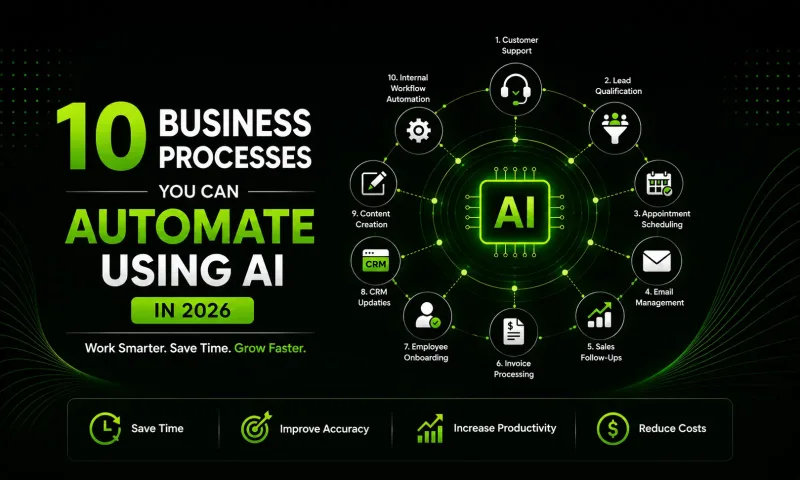
Softlyx Technologies builds custom AI chatbot and business automation solutions designed around your existing workflow. From 24/7 customer assistance and lead qualification to appointment booking and automated follow-ups, we can help you create a smarter customer journey.
Ready to explore AI automation for your business? Contact Softlyx Technologies today and let's discuss how AI can help your business save time, capture more leads, and grow.

Comments (0)
Be the first to comment.